Storm Panels · Brevard County FL
What Brevard County Homeowners Need to Know Before They Buy
Lightweight, clear, and rated for 140+ mph winds. Here is what Florida-approved actually means, how polycarbonate compares to aluminum, what it costs in Brevard County, and why permitting matters.
Storm panels are the most affordable category of hurricane protection we offer, and polycarbonate panels are consistently the ones that surprise people the most. When homeowners in Palm Bay or Melbourne see them for the first time — completely transparent, lighter than aluminum, stacked neatly in a garage corner — there is usually a moment of genuine skepticism. Then we explain what they are actually rated for, and the conversation changes.
If you have been researching storm panels and wondering whether polycarbonate is legit, whether it is actually Florida-approved, whether it will hold up, whether it is worth choosing over aluminum — this post gives you a straight answer. No fluff.
Two paths to Florida approval
Miami-Dade NOA or Florida Building Code approval — both are valid, both are required
Generic polycarbonate sheeting from a hardware store is not a hurricane panel. Every product we install carries documented approval numbers that the county inspector and your insurer can verify.
Brevard Hurricane Protection | (321) 770-2068 | Free estimate for Palm Bay and Melbourne homeowners
What Does “Florida Approved” Actually Mean for Storm Panels?
In Florida, hurricane protection products must meet one of two standards to be legally installed as code-compliant storm protection:
Miami-Dade NOA
The most stringent product approval standard in the country, developed after Hurricane Andrew. Passes laboratory testing for large missile impact, cycling pressure, and structural integrity. Accepted statewide.
Florida Building Code Approval
Statewide approval issued through the Florida DBPR. Products tested to ASTM E1886 and E1996 standards. Required for any permitted installation in Brevard County.
Both standards cover polycarbonate panels. The key is making sure the specific product carries one of these approvals — not just that it is made of polycarbonate. When we install storm panels in Brevard County, every product comes with the NOA or FBC approval number. That paperwork matters for your permit and your wind mitigation report.
Clear vs. Corrugated Polycarbonate: What Is the Difference?
Polycarbonate storm panels come in two main profiles and the difference affects both function and aesthetics:
Clear Flat Polycarbonate Panels
Fully transparent, flat profile, typically 3/16 inch to 1/4 inch thick. Popular on the front of homes where homeowners don’t want the boarded-up look before a storm. With clear panels, you keep some natural light inside and can see outside even when panels are installed.
Best for: front-facing windows, HOA visibility requirements, seasonal homeowners who want a less alarming look when panels are up
Corrugated Polycarbonate Panels
The corrugated profile adds structural rigidity without adding weight, meaning these panels can span larger openings than flat panels of the same thickness. They are translucent rather than fully transparent — light comes through but not a clear view.
Best for: wider windows, sliding glass doors, rear or side openings where structural span matters more than visibility
A note from our team in Brevard County: A lot of homeowners use a mix — clear flat panels on the front of the house and corrugated panels on side and rear openings. Best of both worlds — curb appeal when panels are up, structural reliability across the whole home.
Polycarbonate vs. Aluminum Storm Panels: An Honest Comparison
This is the question we get most often when homeowners are shopping for storm panels. Both are Florida-approved options. Here is an honest side-by-side:
| Feature |
Polycarbonate |
Aluminum |
| Weight |
Lighter — easier to handle solo |
Heavier, often a two-person job |
| Visibility |
Clear or translucent — light gets in |
Opaque, full blackout when installed |
| Cost |
Slightly higher than aluminum |
Typically the lowest cost option |
| Corrosion |
Does not rust — ideal for coastal homes |
Can oxidize near saltwater without treatment |
| Storage |
Lighter stack, easier to move |
Heavier stack, more space needed |
| Impact rating |
Miami-Dade rated when properly installed |
Miami-Dade rated when properly installed |
Our honest recommendation: If you are within a few miles of the coast — Cocoa Beach, Satellite Beach, Melbourne Beach, Indian Harbour Beach — polycarbonate’s corrosion resistance is a practical advantage. Salt air is hard on aluminum over time even with anodized finish. If cost is the primary driver and you are further inland, aluminum is a perfectly solid choice.
What Does It Cost to Install Polycarbonate Storm Panels in Brevard County?
Cost depends on the number of openings, the size of each opening, and whether your home already has the required track hardware. For a typical 3-bedroom, 2-bathroom home in Palm Bay or Melbourne with 12 to 16 standard openings:
Full home panels (supply + install + permit)
12 to 16 openings, standard sizes
$2,500 to $5,500
Track hardware (if not already installed)
Per linear foot
$8 to $15/ft
Sliding glass door panels
Per door, depending on width
$300 to $600
Garage door protection
Separate product, size and type dependent
$800 to $1,800
These are honest ranges based on projects we complete in Brevard County. Every home is different. We provide written quotes with no pressure and no obligation — you will know exactly what you are paying before we schedule installation.
Professional Installation vs. DIY: What Brevard County Requires
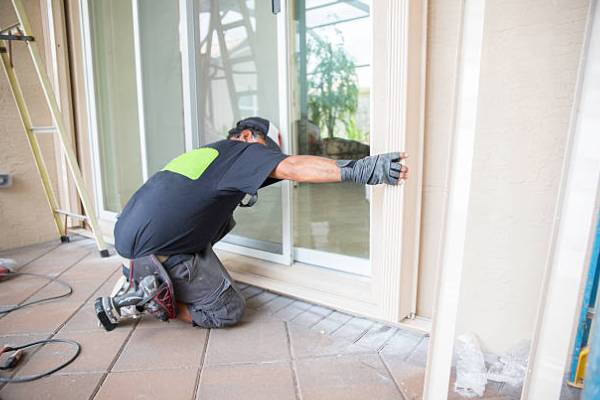
Brevard County requires a permit for permanent hurricane protection installation. This includes the track hardware that polycarbonate panels slide into — it is permanently attached to your home’s structure, which means it needs to be inspected and meet the Florida Building Code.
The panels themselves, once tracks are in place, can be deployed by the homeowner. But the track installation requires a licensed contractor. We handle the entire process: product selection, permit application, installation, and county inspection. Most Melbourne homeowners tell us they can install all their panels in under two hours once the tracks are in.
One more thing worth knowing: Unpermitted hurricane protection will not qualify for your wind mitigation insurance discount, even if the product itself is Florida approved. The insurer’s OIR form asks whether protection was installed to code with a completed inspection. If the permit was not pulled, the answer is no and the discount will not apply. Always permit the work.
Frequently Asked Questions: Polycarbonate Storm Panels in Brevard County
What does “Florida approved” mean for polycarbonate storm panels?
It means the panel carries either a Miami-Dade County NOA or a Florida Building Code product approval number. These approvals require laboratory testing for large missile impact, cycling pressure, and structural integrity. Generic polycarbonate sheeting from a hardware store is not an approved hurricane panel.
How thick should polycarbonate hurricane panels be in Florida?
For Florida Building Code and Miami-Dade approval, polycarbonate panels are typically 3/16 inch to 1/4 inch thick depending on the span of the opening and your location’s design wind speed. In Brevard County’s coastal areas, products must be rated for 140 mph or higher.
Can polycarbonate panels be used on a lanai or porch?
Standard storm panels are designed for window and door openings in a track system. For lanais and large open porch areas, a hurricane screen system is typically the better solution — specifically designed for large, non-standard openings. We can assess both options for your home at no cost.
How do I store polycarbonate panels when not in use?
Most homeowners store them horizontally in a garage on padded brackets or leaning slightly angled against a wall. Because they are lighter than aluminum, panels for a 2,000 sq ft home typically fit in a 4-foot-wide section of a two-car garage. We label every panel during installation so each one goes back in the right track.
Get a Free Estimate in Brevard County
We visit your home, measure every opening, and provide a written, itemized quote. Polycarbonate, aluminum, or a combination — we’ll recommend what makes sense for your home, your budget, and your location.
We serve Melbourne, Palm Bay, Cocoa Beach, Titusville, Rockledge, Merritt Island, Satellite Beach, and surrounding Brevard County communities.
Call (321) 770-2068 — Free Estimate
Request a Quote Online
Business
Brevard Hurricane Protection
Locally owned hurricane shutter and impact window installation — Space Coast FL
Service Area
Melbourne · Palm Bay · Cocoa Beach · Titusville · Rockledge · Merritt Island · Satellite Beach · All of Brevard County FL